Our story
Post Apples Farm's story began in 1890 with Charles Post, who started the farm growing beans, red raspberries, apples, and grapes. His son, Archie, grew up helping on the farm and eventually took over, expanding the operation to include cabbage and chickens.
In 1943, the farm became known as A.G. Post and Son when Archie's son, Howard, joined the family business. In 1956, the name changed again to A.G. Post and Sons as Howard and his brother Rusty became involved in the farm. During this time, the family grew potatoes and oats while continuing to grow apples.
In 1994, Rusty, along with Howard's son Gordon, became partners in the farm, and the name changed to Post Apple Scientific. During this period, the farm's apples were distributed to schools for school lunches.
In 2010, Gordon and two of his children, Archie and Anastasia, began a new chapter for the farm by starting a Community Supported Agriculture (CSA) program. Archie took on much of the mechanical work, while Anastasia managed the CSA. Together, they worked to bring fresh, locally grown produce directly to families in the community.
For 17 years, the CSA was an important part of Post Apples Farm. It brought together local families, fresh produce, and a shared appreciation for knowing where their food comes from. We are incredibly grateful to everyone who supported the program, volunteered, picked up shares, and became part of our farm family over the years.
As of 2027, we have made the decision to bring our CSA program to a close. While this chapter is ending, Post Apples Farm is not. We remain committed to carrying on our family's farming tradition, growing fresh produce, and serving our community.
Five generations of farming have shaped who we are, and we look forward to seeing what the next chapter holds.
How We Farm
At Post Apples Farm, we believe that growing quality produce begins with thoughtful farming practices and generations of experience. Farming in northwestern Pennsylvania, near the shores of Lake Erie, brings its own unique challenges. From unpredictable weather to changing growing conditions, every season requires careful attention and a willingness to adapt.
Our approach combines traditional farming knowledge with practical growing methods that help us produce healthy, high-quality fruits and vegetables while being mindful of the land we depend on.
Our Low-Input Philosophy
We consider ourselves a low-input farm, which means we strive to use crop protection products only when they are truly needed.
Throughout the growing season, we regularly check our fields for signs of pests and diseases. Rather than automatically spraying on a set schedule, we evaluate what is happening in our fields and determine whether treatment is necessary.
When intervention is needed, we take action to protect our crops and maintain the quality of our harvest. This approach allows us to make informed decisions while reducing unnecessary applications.
Biodegradable Mulch: Giving Our Plants a Head Start
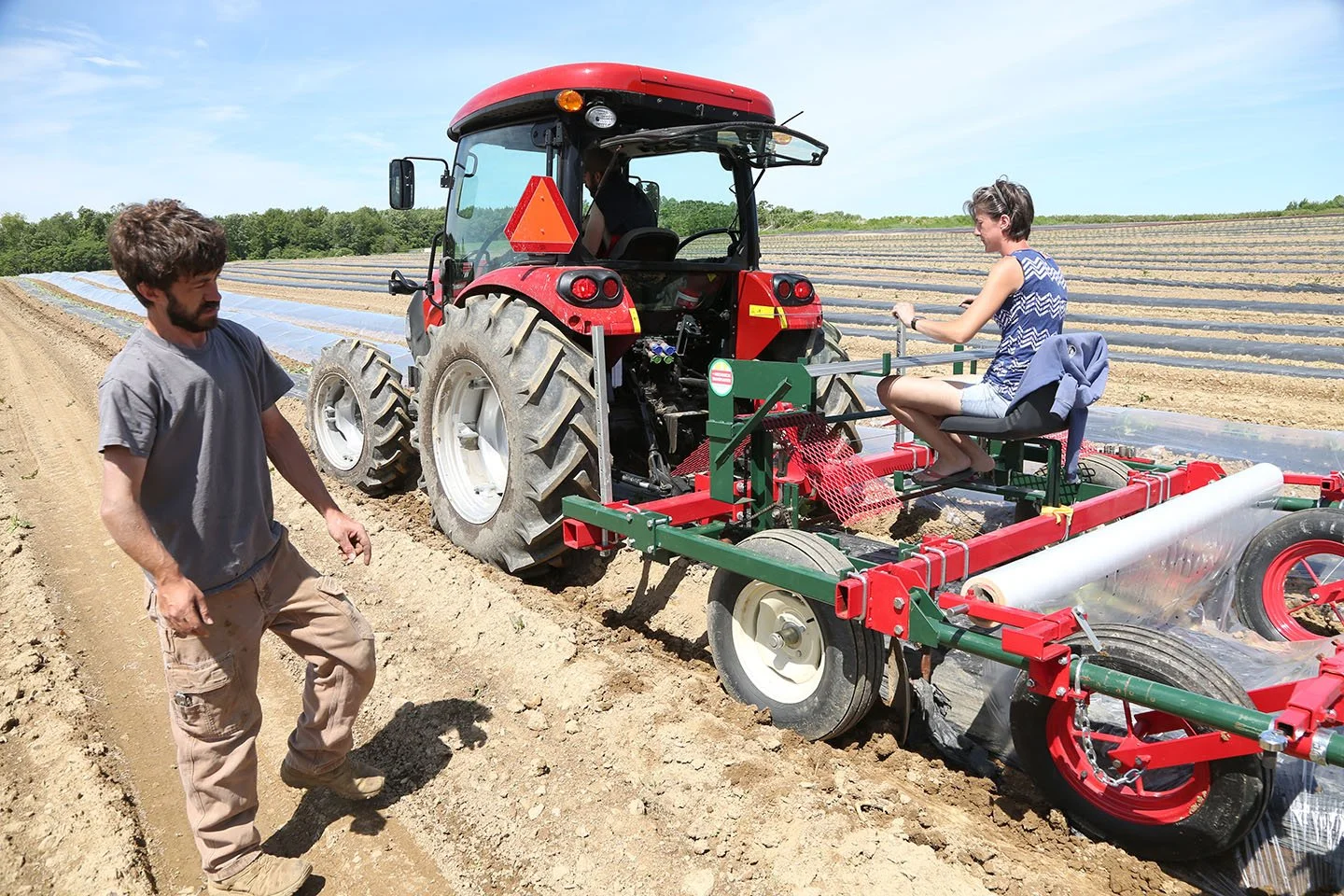
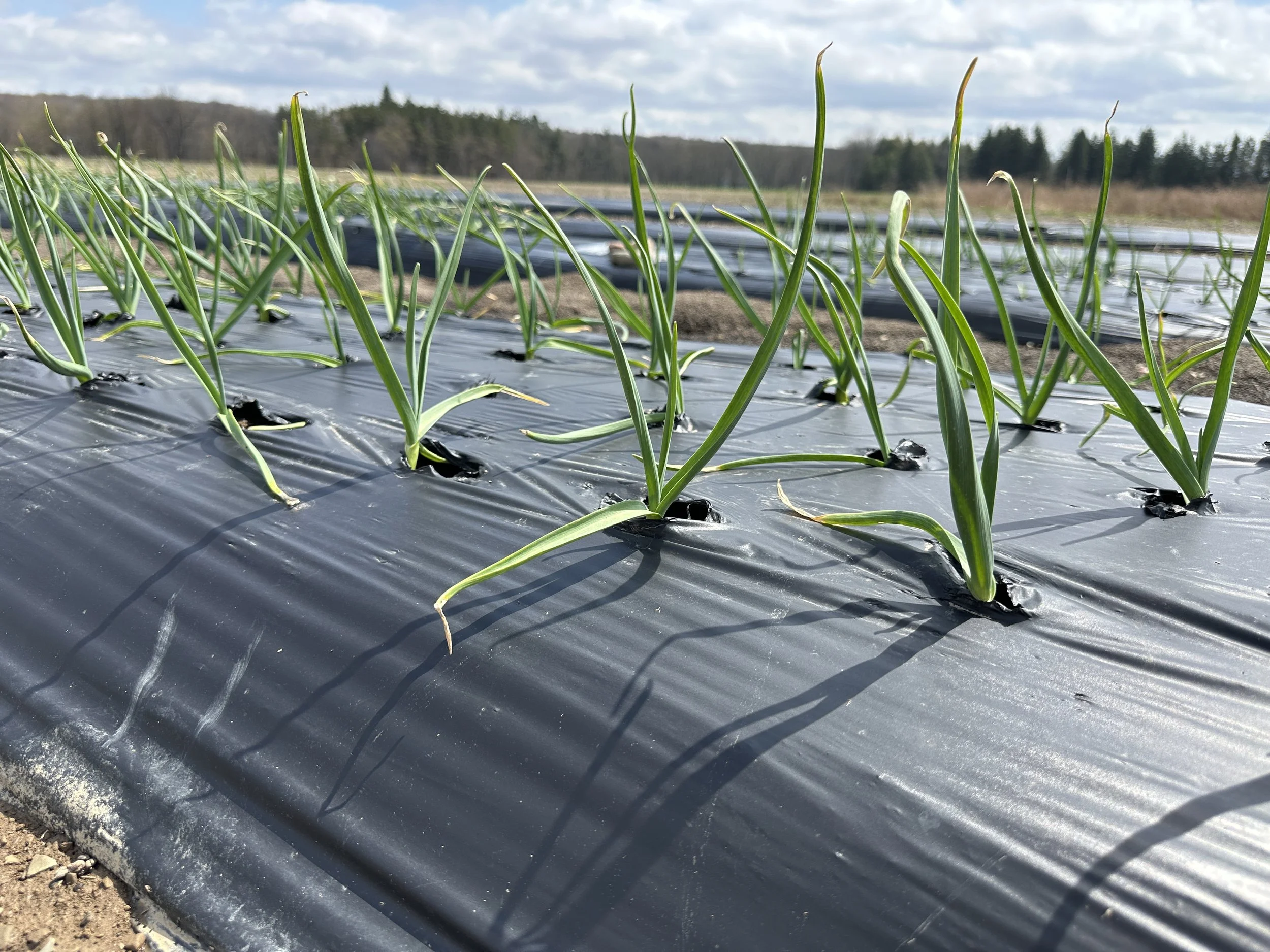
One of the ways we help our crops thrive is by planting many of our vegetables on biodegradable plastic mulch.
Here in northwestern Pennsylvania, cooler soil temperatures can make it challenging for young plants to get established. The mulch helps warm the soil, encouraging earlier growth and giving our crops a stronger start to the season.
It also helps suppress weeds and can reduce certain pest pressures, making it easier to manage our fields without relying as heavily on additional weed-control methods.
At the end of the growing season, the biodegradable mulch is designed to be tilled into the soil, where it gradually breaks down through biological processes under suitable conditions. This eliminates the need to pull up and dispose of conventional plastic mulch and helps reduce agricultural plastic waste.
Crop Rotation: Caring for Our Fields
We practice crop rotation by changing where different crops are planted from year to year.
Growing the same crop in the same location repeatedly can increase certain pest and disease pressures and place ongoing demands on the soil. Rotating our crops helps interrupt some of these cycles and supports the long-term productivity of our fields.
It's a practical farming method that helps us care for the land while preparing for future growing seasons.
Supporting Healthy Plant Growth
Every crop needs the right nutrients to grow and produce a quality harvest. When planting seeds or transplanting young plants into our fields, we apply fertilizer to help provide the nutrients they need as they establish and begin growing.
Combined with crop rotation, careful field management, and attention throughout the growing season, this is part of our approach to maintaining productive crops.
Farming with Purpose
After more than 135 years and five generations, we've learned that successful farming requires hard work, patience, and the ability to adapt.
We know that no two growing seasons are alike, and there is no single method that solves every challenge. Our goal is to make thoughtful decisions, avoid unnecessary inputs, and grow the best fruits and vegetables we can for the families and businesses that depend on us.
We're proud of how we farm, and we believe our customers deserve to know how their food is grown.